Posts Tagged ‘Hayman’

The Purpose and Future of Fiction

Sunday, March 31st, 2013

James Hayman: There have been many dire predictions over the past few years that what we do and enjoy as writers and readers is doomed both as entertainment and art.  The arguments are simple. Today, as never before, the competition for attracting interested customers, or as we used to call it when I was in the advertising business on Madison Avenue, for share of eyeballs is fierce.  They competitors are obvious and omnipresent.  TV. Movies. Music. Trolling the Internet.  Finding “friends” and communicating with them on Facebook and other social media. Video games. Online gaming. Texting. Sexting.  There are probably others I haven’t thought of. And, no doubt, there will be even more to come that nobody else has yet thought of either.

With all of these competitors and distractions, there is certainly legitimate reason to ask how many among us will continue to devote ten to fifteen solid hours to sitting and reading a novel either for simple entertainment or in appreciation of literary art.

I think there is hope. The enormous popularity among young people, of the Harry Potter books and more recently the Hunger Games Trilogy, gives me hope for the survival of a class of people willing and eager to spend hours alone reading a novel rather than watching movies or sports or slaughtering realistic cartoon characters in violent video games.

I think people will continue to read the crime novels that we, the “Maine Crime Writers,” create as well as other genre and literary fiction.  My reasoning is simple. Fiction in all its forms offers us something none of those other things can match.

To put it simply, fiction uniquely allows us, both as readers and as writers, to enter into, share and explore the interior life of other human beings.  Both the characters in the book. And the creator of those characters. “The deepest purpose of reading and writing fiction,”  novelist Jonathan Franzen argues, “is to sustain a sense of connectedness, to resist existential loneliness.” Characters that are well drawn offer readers insights into themselves and to other human beings whose thoughts and feelings are usually as real and intimate as the author can make them. Writers who write well offer eaders similar insights into themselves.

As a writer of fiction, the physically solitary act of creating a character, allows me to explore as deeply as I know how, the inner lives of other people. The the feelings, emotions and attitudes of the characters I create  are of course bent by passing through the prism of my own attitudes and emotions.  But this in no way negates the connectedness Franzen was writing about. It adds to it.

Both writing and reading fiction are voyeuristic exercises. We peer into the lives of others.  But unlike the voyeur who eavesdrops on a conversation or reads someone else’s mail or illicitly peers through a window, the writer and reader of a well-imagined and well-crafted novel get to share the deepest emotions and thoughts of the characters. They come to know and understand them in a way that it is difficult to match in real life where  even those closest to us create emotional barriers and try to reveal only what they want us to know about them.

The removal of those barriers allows the sense of connectedness Franzen was talking about.

But, some may ask, how real can the connectedness be when the characters are made up.  When the characters aren’t real.

The simple answer is that they are real.

McCabe is to some extent the real me.  So is Maggie and the other characters in my books, both male and female, adult and child.  But in the act of creating them, in the process of giving them thoughts and feelings, of putting them in conflict and often in dire straits, the characters often take over and take on lives of their own.

I’ve written before that perhaps the most difficult and interesting character for me to create in the three books I’ve written so far was Abby Quinn the young schizophrenic woman in The Chill of Night.  In creating Abby I spent a lot of time reading and thinking about schizophrenia. I read a number of memoirs written by schizophrenics about their own interior lives.  I began to understand what its like to suffer this terrible disease. Then when I put Abby in extreme circumstances of witnessing a murder and then being pursued by the murderer, my understanding of who she was and how she would react became much deeper.  I believe readers of the book begin to share that understanding and develop a deeper sympathy and empathy for someone like Abby. That kind of understanding and empathy is what Franzen was talking about when he said, “The deepest purpose of reading and writing fiction is to sustain a sense of connectedness, to resist existential loneliness.

Turn of Mind. A Brilliant and Disturbing Tale of Murder.

Friday, October 26th, 2012

James Hayman: “My name is Dr. Jenifer White . I am sixty-four years old. I have dementia. My son , Mark, is twenty-nine. My daughter, Fiona, twenty-four. A caregiver, Magdalena, lives with me.”

This is the opening paragraph of the front jacket copy of one of the most original, beautifully written and genuinely frightening murder mysteries I’ve read in years. Titled Turn of Mind, the book is a debut novel by a writer named Alice LaPlante  who teaches creative writing at Stanford and San Francisco State University.  LaPlante’s previous fiction consisted of short stories published in literary journals like Epoch and the Southwestern Review.

Turn of MindImagine a murder mystery largely narrated in the voice and thoughts of the suspected and likely murderer, a once distinguished orthopedic surgeon who specialized in surgery of the hand but who is now descending into advanced Alzeimer’s Disease.  The suspect, a woman named Jennifer White, has no idea whether or not she committed the crime. At times she thinks she may have.  At other times she thinks she might not have.  As often as not she’s not even aware that the victim of the crime is actually dead. Or that her husband James is also dead. Or, as the book progresses, even who her own children are.

Still the evidence against Dr. White as the killer seems compelling.  The victim, named Amanda O’Toole, was, before her death, an imperious and controlling woman in her seventies who lived a few doors down from Dr. White in an upscale Chicago neighborhood. In spite of O’Toole’s bristly personality and their frequent disagreements O’Toole and Dr. White are described as lifelong best friends. Each had keys to the other’s house.  O’Toole was the godmother of the Whites’ two children, Mark and Fiona.

The victim is already dead when the book opens.  Her body was found lying in a pool of blood.  The cause of death was a blow to the head. White and O’Toole were heard arguing loudly shortly before the killing.  Even more damning for White, the hand surgeon, is the fact that four of the fingers of O’Toole’s right hand were carefully and expertly amputated after her death for no apparent reason.  Later in the book a Saint Christopher’s medal belonging to White turns up. It is found to have traces of O’Toole’s blood on it.

What makes this book so compelling and frankly unforgettable, however, is not the details of the crime or the work of the cop in charge, a dogged and determined woman named Detective Luton. It is not even the ultimate solution to the murder.  Rather it is the beautifully constructed portrait of the disintegration of a once brilliant mind belonging to a character we come to know and care for.

A group blog on the Maine Crime Writers blogsite (www.mainecrimewriters.com)  this weekend will have us all tell of the scariest villains we’ve experienced in fiction. While Dr. White is no Hannibal Lechter, in many ways she is more frightening.  The descent into Alzheimer’s Alice LaPlante describes so beautifully is a condition we all fear for ourselves.  It is one that many of us have experienced first hand watching the slow disintegration of elderly parents or others we care for. It makes an absolutely brilliant choice to wrap around a tale of murder and deceit.

In Praise of a Perceptive Editor

Friday, August 3rd, 2012

James Hayman:  At the moment, I’m in the middle of making final revisions to my third McCabe/Savage thriller. Titled Darkness First the book is due out in the UK in June 2013 and, hopefully, around the same time in the US.

Darkness First is the first of my books to require any kind of extensive editorial rewriting.  Number two, The Chill of Night, sailed through with only minor tinkering and the first, The Cutting, required only one fairly simple, though important change to attain its final form.

Darkness First was the most difficult of the three books to write, in many ways the most ambitious and, in my view, also the most interesting.  It’s also the first of the three that helped me truly appreciate how valuable a perceptive and talented editor can be, in this case Stefanie Bierwerth who works with Penguin UK in London, can be.

The plot itself is fairly simple.  A large haul of oxycontin is smuggled by boat from Saint John, New Brunswick into Eastport, Maine. A distribution network is set up. The drugs are sold. Money is made.  Eventually, there is a falling out between the two people responsible for the crime. One is a vicious killer named Conor Riordan and the other a beautiful young woman from Eastport named Tiffany Stoddard. On a dark and steamy (no, not stormy) night in Machias State Park, Conor Riordan brutally stabs Tiff Stoddard to death.  The police quickly discover Riordan is the culprit. The only problem is Conor Riordan doesn’t exist.

At the suggestion of her father, Washington County Sheriff John Savage, Detective Maggie Savage of the Portland Police Department comes home to Washington County and volunteers to join the state police investigation into the crime. Eventually, with the help of her Portland partner, Mike McCabe, Maggie discovers the true killer and solves the crime.

However, in my view, what makes the book work is not just the story line (which I think is pretty good), but also the exploration of Maggie’s feelings for the other major characters and the conflicted feelings/relationships she has with them.  She  finds herself trying to mediate a nasty feud between two men she has loved all her life, her seventy four year old father, who she learns may be dying of cancer, and her  wild and irresponsible younger brother Harlan, who has recently returned from service in Iraq and is recovering from a serious wound and suffering from PTSD.

Maggie’s also trying to sort out her screwed-up love life and needs to resolve the strong attraction she feels to both her Portland partner Mike McCabe and a charming and handsome state police detective named Sean Carroll.

In the end unraveling and resolving these feelings and relationships added a lot to the story.  It also made the book more challenging to write and, in my view, ultimately much more interesting. Stef Bierwerth at Penguin understood this and her perceptive insights and suggestions were a huge help in getting it right. Thanks in part to her, I think it may be the strongest of  the three McCabe/Savage books so far.  I hope my readers agree.

A Glorious 4th on the 5th

Wednesday, July 11th, 2012

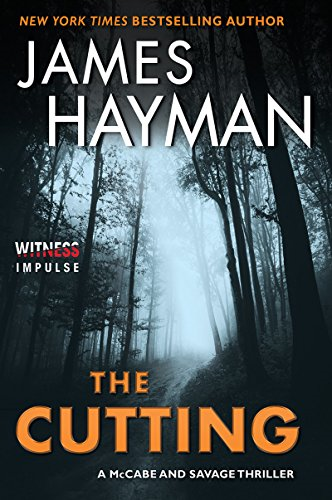
James Hayman: Although there are a lot of great neighborhoods in the city of Portland, anyone who reads my books must know that Munjoy Hill has long been my favorite. My hero Mike McCabe, his girlfriend Kyra and his daughter Casey share a three-bedroom condo on the Eastern Prom “looking out at Casco Bay and the islands. That view, and the fact that it was less than a mile walk to police headquarters were the primary reasons he’d paid more than he could afford for the…condo when he signed on, three years earlier, as chief of the PPD’s Crimes Against People unit.” (From The Cutting.)

In an early scene from The Chill of Night I describe McCabe as he “turned left on Congress and headed west down Munjoy Hill. In spite of a decade of gentrification The Hill still retained the look and feel of its working class roots. Smallish wood-frame houses built sometime around 1900. Most divided into apartments. Tonight (an especially frigid winter night) they were all closed up tight, curtains drawn. He continued down the hill, passing a few couples heading for one or another of the bars and restaurants that were sprouting like weeds. The Front Room. The Blue Spoon. Bar Lola.”

Detective Maggie Savage, McCabe’s partner in crime-fighting has her own place on The Hill, a three-flight walkup on Vesper Street, a couple of blocks in from McCabe’s apartment on the Prom.

This summer my wife Jeanne and I decided for the second summer in a row to rent our house on Peaks Island to summer visitors and move into town.  We’re living on the third-floor of one of those hundred-year-old wood frame houses on The Hill (more or less halfway between McCabe’s and Maggie’s) where we enjoy an excellent view of the water.  Not quite as good as McCabe’s but still pretty nice.

Portland fireworks display goes off almost flawlessly (Press-Herald)

Portland fireworks display goes off almost flawlessly (Press-Herald)

Perhaps the best part is that we’re only one house in from the Prom and less than a one-minute walk from Fort Allen Park, Portland’s most beautiful public space and, without question, the jewel in Munjoy Hill’s crown.

Set on a sixty-eight acre grassy hill, Fort Allen Park slopes down from the Prom and offers, in addition to its tennis courts, sandy beach and picnic tables, endlessly breath-taking views of Casco Bay and the islands beyond.

Every Fourth of July what seems like most of the population of Portland crowds into the park to watch the annual fireworks display set off from a barge anchored just off-shore.  This year, however, just as the Portland Symphony was winding up its concert of patriotic music and minutes before the fireworks were set to begin,  a lightning storm lit up the eastern skies in a heavenly display that dwarfed anything the city could hope to put on. Torrential rain, high wind and dangerously close lightning strikes forced officials to cancel the show and reschedule it for the following night. The crowd trudged home, soaked I assume, to the skin.  I thought, given the disappointing evening, most wouldn’t return.

Turned out I was wrong.  By the evening of the fifth the skies had cleared and most of the people came back. Not quite as many as the night before but still an estimated thirty thousand of them.  The Portland Symphony replayed its entire program concluding with the signature 1812 Overture which was followed one of the best fireworks displays I can remember seeing anywhere.

According to the Portland Press Herald, “PSO conductor Robert Moody summed up the mood of the crowd before the signature overture (began). ‘ “I don’t think there’s any place better in the country to celebrate Independence Day than on the Eastern Prom with the Portland Symphony Orchestra,’ he said, to cheers.” I agree.


The Loneliness of the Long-Distance Writer

Wednesday, August 31st, 2011

One of my favorite films from the 60’s is Tony Richardson’s The Loneliness of the Long Distance Runner starring a very young Tom Courtenay.  The film is based on a short story by Alan Sillitoe who also wrote the screenplay.  It tells the story of a rebellious young man from England who is arrested for robbing a bakery and is sent to a boys reformatory or a borstal as the Brits call it. While there he discovers that he has a gift for long-distance running and much of the film is about how his lonely reveries while running mile after mile, ultimately shape and change his life.

In my view the film provides an excellent metaphor for the craft of writing.


Writing is a solitary, if not anti-social pursuit.  It’s something you must do alone. If the piece you’re writing happens to be a three or four hundred page novel you have to plan on being alone for incredibly long stretches of time.  If you crave or need constant or even frequent attention and interaction with other people, the best advice anyone can give you about writing a novel is don’t.

The single line I remember most clearly from Annie Dillard’s excellent memoir The Writing Life, (which I read several years ago) is her response to a reader’s question about what makes the ideal writing space.

Dillard, at the time, lived in a beautiful house overlooking the Pacific Ocean in Washington and this reader no doubt was expecting Dillard to describe a cozy, book-filled study with endless views of endless waves lapping against the magnificent coastline. Instead she said that the ideal writing room, at least for her, was a cinderblock cell devoid of books, telephone, television and even windows through which she could catch a glimpse of the outside world.

Like Dillard, I’m lucky enough to live in a beautiful house overlooking the ocean in Maine.  My designated writing room is a small, admittedly book-lined room on the second floor of my house and it boasts one of the prettiest views anyone could ever imagine of Casco Bay and the islands stretching out in the distance.  When I write I close the shades and shut it all out. I also turn off the telephone and disconnect myself from the Internet.

Even writers who prefer writing in crowded places, coffee shops for example, or libraries (where I often write) or while riding on trains or planes, essentially have to be alone inside their own minds and imaginations while they craft their pieces. Their only company are the characters who people their stories (whom I sometimes describe as my imaginary friends). The only interesting conversations they get to engage in are the dialogue exchanges they put in their characters’ mouths. The only beautiful views, or views of any sort, they can enjoy are the ones gazed on by the characters in their tales.

All of this makes me, if not other writers, something of a curmudgeon.  When my wife gently knocks on my door, usually to ask me a civil and often necessary question, my typical response is a low dangerous growl. Cujo in spectacles.

I am currently on deadline to finish my third novel and so I spend all my working time by myself. I’ll be happy when the book is finally finished.  So, I daresay, will my wife and any friends I still have left, those who I haven’t totally driven away.