Archive for the ‘From The Author’ Category

The Purpose and Future of Fiction

Sunday, March 31st, 2013

James Hayman: There have been many dire predictions over the past few years that what we do and enjoy as writers and readers is doomed both as entertainment and art.  The arguments are simple. Today, as never before, the competition for attracting interested customers, or as we used to call it when I was in the advertising business on Madison Avenue, for share of eyeballs is fierce.  They competitors are obvious and omnipresent.  TV. Movies. Music. Trolling the Internet.  Finding “friends” and communicating with them on Facebook and other social media. Video games. Online gaming. Texting. Sexting.  There are probably others I haven’t thought of. And, no doubt, there will be even more to come that nobody else has yet thought of either.

With all of these competitors and distractions, there is certainly legitimate reason to ask how many among us will continue to devote ten to fifteen solid hours to sitting and reading a novel either for simple entertainment or in appreciation of literary art.

I think there is hope. The enormous popularity among young people, of the Harry Potter books and more recently the Hunger Games Trilogy, gives me hope for the survival of a class of people willing and eager to spend hours alone reading a novel rather than watching movies or sports or slaughtering realistic cartoon characters in violent video games.

I think people will continue to read the crime novels that we, the “Maine Crime Writers,” create as well as other genre and literary fiction.  My reasoning is simple. Fiction in all its forms offers us something none of those other things can match.

To put it simply, fiction uniquely allows us, both as readers and as writers, to enter into, share and explore the interior life of other human beings.  Both the characters in the book. And the creator of those characters. “The deepest purpose of reading and writing fiction,”  novelist Jonathan Franzen argues, “is to sustain a sense of connectedness, to resist existential loneliness.” Characters that are well drawn offer readers insights into themselves and to other human beings whose thoughts and feelings are usually as real and intimate as the author can make them. Writers who write well offer eaders similar insights into themselves.

As a writer of fiction, the physically solitary act of creating a character, allows me to explore as deeply as I know how, the inner lives of other people. The the feelings, emotions and attitudes of the characters I create  are of course bent by passing through the prism of my own attitudes and emotions.  But this in no way negates the connectedness Franzen was writing about. It adds to it.

Both writing and reading fiction are voyeuristic exercises. We peer into the lives of others.  But unlike the voyeur who eavesdrops on a conversation or reads someone else’s mail or illicitly peers through a window, the writer and reader of a well-imagined and well-crafted novel get to share the deepest emotions and thoughts of the characters. They come to know and understand them in a way that it is difficult to match in real life where  even those closest to us create emotional barriers and try to reveal only what they want us to know about them.

The removal of those barriers allows the sense of connectedness Franzen was talking about.

But, some may ask, how real can the connectedness be when the characters are made up.  When the characters aren’t real.

The simple answer is that they are real.

McCabe is to some extent the real me.  So is Maggie and the other characters in my books, both male and female, adult and child.  But in the act of creating them, in the process of giving them thoughts and feelings, of putting them in conflict and often in dire straits, the characters often take over and take on lives of their own.

I’ve written before that perhaps the most difficult and interesting character for me to create in the three books I’ve written so far was Abby Quinn the young schizophrenic woman in The Chill of Night.  In creating Abby I spent a lot of time reading and thinking about schizophrenia. I read a number of memoirs written by schizophrenics about their own interior lives.  I began to understand what its like to suffer this terrible disease. Then when I put Abby in extreme circumstances of witnessing a murder and then being pursued by the murderer, my understanding of who she was and how she would react became much deeper.  I believe readers of the book begin to share that understanding and develop a deeper sympathy and empathy for someone like Abby. That kind of understanding and empathy is what Franzen was talking about when he said, “The deepest purpose of reading and writing fiction is to sustain a sense of connectedness, to resist existential loneliness.

Turn of Mind. A Brilliant and Disturbing Tale of Murder.

Friday, October 26th, 2012

James Hayman: “My name is Dr. Jenifer White . I am sixty-four years old. I have dementia. My son , Mark, is twenty-nine. My daughter, Fiona, twenty-four. A caregiver, Magdalena, lives with me.”

This is the opening paragraph of the front jacket copy of one of the most original, beautifully written and genuinely frightening murder mysteries I’ve read in years. Titled Turn of Mind, the book is a debut novel by a writer named Alice LaPlante  who teaches creative writing at Stanford and San Francisco State University.  LaPlante’s previous fiction consisted of short stories published in literary journals like Epoch and the Southwestern Review.

Turn of MindImagine a murder mystery largely narrated in the voice and thoughts of the suspected and likely murderer, a once distinguished orthopedic surgeon who specialized in surgery of the hand but who is now descending into advanced Alzeimer’s Disease.  The suspect, a woman named Jennifer White, has no idea whether or not she committed the crime. At times she thinks she may have.  At other times she thinks she might not have.  As often as not she’s not even aware that the victim of the crime is actually dead. Or that her husband James is also dead. Or, as the book progresses, even who her own children are.

Still the evidence against Dr. White as the killer seems compelling.  The victim, named Amanda O’Toole, was, before her death, an imperious and controlling woman in her seventies who lived a few doors down from Dr. White in an upscale Chicago neighborhood. In spite of O’Toole’s bristly personality and their frequent disagreements O’Toole and Dr. White are described as lifelong best friends. Each had keys to the other’s house.  O’Toole was the godmother of the Whites’ two children, Mark and Fiona.

The victim is already dead when the book opens.  Her body was found lying in a pool of blood.  The cause of death was a blow to the head. White and O’Toole were heard arguing loudly shortly before the killing.  Even more damning for White, the hand surgeon, is the fact that four of the fingers of O’Toole’s right hand were carefully and expertly amputated after her death for no apparent reason.  Later in the book a Saint Christopher’s medal belonging to White turns up. It is found to have traces of O’Toole’s blood on it.

What makes this book so compelling and frankly unforgettable, however, is not the details of the crime or the work of the cop in charge, a dogged and determined woman named Detective Luton. It is not even the ultimate solution to the murder.  Rather it is the beautifully constructed portrait of the disintegration of a once brilliant mind belonging to a character we come to know and care for.

A group blog on the Maine Crime Writers blogsite (www.mainecrimewriters.com)  this weekend will have us all tell of the scariest villains we’ve experienced in fiction. While Dr. White is no Hannibal Lechter, in many ways she is more frightening.  The descent into Alzheimer’s Alice LaPlante describes so beautifully is a condition we all fear for ourselves.  It is one that many of us have experienced first hand watching the slow disintegration of elderly parents or others we care for. It makes an absolutely brilliant choice to wrap around a tale of murder and deceit.

In Praise of a Perceptive Editor

Friday, August 3rd, 2012

James Hayman:  At the moment, I’m in the middle of making final revisions to my third McCabe/Savage thriller. Titled Darkness First the book is due out in the UK in June 2013 and, hopefully, around the same time in the US.

Darkness First is the first of my books to require any kind of extensive editorial rewriting.  Number two, The Chill of Night, sailed through with only minor tinkering and the first, The Cutting, required only one fairly simple, though important change to attain its final form.

Darkness First was the most difficult of the three books to write, in many ways the most ambitious and, in my view, also the most interesting.  It’s also the first of the three that helped me truly appreciate how valuable a perceptive and talented editor can be, in this case Stefanie Bierwerth who works with Penguin UK in London, can be.

The plot itself is fairly simple.  A large haul of oxycontin is smuggled by boat from Saint John, New Brunswick into Eastport, Maine. A distribution network is set up. The drugs are sold. Money is made.  Eventually, there is a falling out between the two people responsible for the crime. One is a vicious killer named Conor Riordan and the other a beautiful young woman from Eastport named Tiffany Stoddard. On a dark and steamy (no, not stormy) night in Machias State Park, Conor Riordan brutally stabs Tiff Stoddard to death.  The police quickly discover Riordan is the culprit. The only problem is Conor Riordan doesn’t exist.

At the suggestion of her father, Washington County Sheriff John Savage, Detective Maggie Savage of the Portland Police Department comes home to Washington County and volunteers to join the state police investigation into the crime. Eventually, with the help of her Portland partner, Mike McCabe, Maggie discovers the true killer and solves the crime.

However, in my view, what makes the book work is not just the story line (which I think is pretty good), but also the exploration of Maggie’s feelings for the other major characters and the conflicted feelings/relationships she has with them.  She  finds herself trying to mediate a nasty feud between two men she has loved all her life, her seventy four year old father, who she learns may be dying of cancer, and her  wild and irresponsible younger brother Harlan, who has recently returned from service in Iraq and is recovering from a serious wound and suffering from PTSD.

Maggie’s also trying to sort out her screwed-up love life and needs to resolve the strong attraction she feels to both her Portland partner Mike McCabe and a charming and handsome state police detective named Sean Carroll.

In the end unraveling and resolving these feelings and relationships added a lot to the story.  It also made the book more challenging to write and, in my view, ultimately much more interesting. Stef Bierwerth at Penguin understood this and her perceptive insights and suggestions were a huge help in getting it right. Thanks in part to her, I think it may be the strongest of  the three McCabe/Savage books so far.  I hope my readers agree.

A Glorious 4th on the 5th

Wednesday, July 11th, 2012

James Hayman: Although there are a lot of great neighborhoods in the city of Portland, anyone who reads my books must know that Munjoy Hill has long been my favorite. My hero Mike McCabe, his girlfriend Kyra and his daughter Casey share a three-bedroom condo on the Eastern Prom “looking out at Casco Bay and the islands. That view, and the fact that it was less than a mile walk to police headquarters were the primary reasons he’d paid more than he could afford for the…condo when he signed on, three years earlier, as chief of the PPD’s Crimes Against People unit.” (From The Cutting.)

In an early scene from The Chill of Night I describe McCabe as he “turned left on Congress and headed west down Munjoy Hill. In spite of a decade of gentrification The Hill still retained the look and feel of its working class roots. Smallish wood-frame houses built sometime around 1900. Most divided into apartments. Tonight (an especially frigid winter night) they were all closed up tight, curtains drawn. He continued down the hill, passing a few couples heading for one or another of the bars and restaurants that were sprouting like weeds. The Front Room. The Blue Spoon. Bar Lola.”

Detective Maggie Savage, McCabe’s partner in crime-fighting has her own place on The Hill, a three-flight walkup on Vesper Street, a couple of blocks in from McCabe’s apartment on the Prom.

This summer my wife Jeanne and I decided for the second summer in a row to rent our house on Peaks Island to summer visitors and move into town.  We’re living on the third-floor of one of those hundred-year-old wood frame houses on The Hill (more or less halfway between McCabe’s and Maggie’s) where we enjoy an excellent view of the water.  Not quite as good as McCabe’s but still pretty nice.

Portland fireworks display goes off almost flawlessly (Press-Herald)

Portland fireworks display goes off almost flawlessly (Press-Herald)

Perhaps the best part is that we’re only one house in from the Prom and less than a one-minute walk from Fort Allen Park, Portland’s most beautiful public space and, without question, the jewel in Munjoy Hill’s crown.

Set on a sixty-eight acre grassy hill, Fort Allen Park slopes down from the Prom and offers, in addition to its tennis courts, sandy beach and picnic tables, endlessly breath-taking views of Casco Bay and the islands beyond.

Every Fourth of July what seems like most of the population of Portland crowds into the park to watch the annual fireworks display set off from a barge anchored just off-shore.  This year, however, just as the Portland Symphony was winding up its concert of patriotic music and minutes before the fireworks were set to begin,  a lightning storm lit up the eastern skies in a heavenly display that dwarfed anything the city could hope to put on. Torrential rain, high wind and dangerously close lightning strikes forced officials to cancel the show and reschedule it for the following night. The crowd trudged home, soaked I assume, to the skin.  I thought, given the disappointing evening, most wouldn’t return.

Turned out I was wrong.  By the evening of the fifth the skies had cleared and most of the people came back. Not quite as many as the night before but still an estimated thirty thousand of them.  The Portland Symphony replayed its entire program concluding with the signature 1812 Overture which was followed one of the best fireworks displays I can remember seeing anywhere.

According to the Portland Press Herald, “PSO conductor Robert Moody summed up the mood of the crowd before the signature overture (began). ‘ “I don’t think there’s any place better in the country to celebrate Independence Day than on the Eastern Prom with the Portland Symphony Orchestra,’ he said, to cheers.” I agree.


My Weekend With Madmen, the Season Finale.

Monday, June 18th, 2012

During the 70’s, 80’s and 90’s I worked at some of Madison Avenue’s largest and most prestigious advertising agencies. Most notably, I spent nearly twenty years at Y&R New York which at the time was considered one of the best of the best.

I started as a lowly junior copywriter struggling away in a tiny interior office (we didn’t have cubicles in those days) and rose to become an executive creative director assigned to some of Y&R’s biggest and best accounts. For a time, I even got to sit in an oversized corner office (admittedly on one of the agency’s less prestigious floors) where I got to choose my own furniture and knick-knacks with the help of our on-staff interior decorator.

In other words, I spent my Madison Avenue years kind of like a mini-Don Draper albeit with glasses and curly, instead of slicked back, black hair.  Unlike Draper, after my first seven or eight years on the job, I got to wear jeans and turtleneck sweaters to the office instead of Brooks Brothers suits and skinny ties. At some point, I don’t remember exactly when, wearing jeans to the office became a sign that one possessed greater creative powers. As did sporting facial hair, though only for men.   After that, the suits came out of the closet only when I had to go to meetings with senior clients which was was because most of our senior clients had yet to be informed of the creative powers of blue denim.

Anyway, when Madmen came on the air six seasons ago, I watched one or two episodes and then stopped.  I didn’t find the ones I saw all that interesting and except for news and NY Giant football games I don’t watch a whole lot of television anyway. Obviously, the show turned out to be a big hit and for the last six years whenever I meet someone new at some kind of social function, they inevitably exclaim, ”Oh, you were in advertising. You must watch Madmen.” Up until this weekend, I inevitably disappointed them when I responded “No.”

I had the sense they wanted to question me about the show’s accuracy depicting life in a big New York ad agency back in the day. I suppose, if I had been a Mafia hitman instead of a copywriter, they would have been equally disappointed at my inability to comment on Tony Soprano’s methods of bumping off other wiseguys.

Since I still practice copywriting when I’m not writing my Mike McCabe thrillers, last Thursday I attended a party thrown by the Advertising Club of Maine to celebrate this year’s season finale of Madmen.  After chatting about the show for most of the two or three hours I was there I decided it was time I got up to speed with what all the hoopla was about.  So Saturday morning I hit the Netflix “Watch Instantly” button on my computer and, in something of a Madmen marathon, spent the next two days arbitrarily watching nine episodes of Season Three.

So now I can finally stop disappointing all those people who have been asking for the inside skinny for last six years and provide the definitive answer.  Yes, I will tell them, the show is fairly accurate though more than a little exaggerated.

Yes, we worked hard.  “If you don’t come in Saturday, don’t bother coming in Sunday,” was a quip one often heard in the halls of Y&R on Friday afternoons.

Yes, the politics could be gruesome. But politics anywhere are always gruesome.

Yes, we drank and smoked a lot. The creative head of the agency, my boss for most of my twenty years at Y&R, swilled down at least two and usually three vodka martinis and smoked about ten cigarettes during the course of each and every two hour lunch I ever had with him. Even so he worked till nine or ten practically every night and showed no signs of diminished judgment. In fact, even after three martinis, he was one of the smartest guys I ever worked with.

And yes, as in Madmen, people had more than a few illicit office affairs often with other people’s spouses.  I remember one young female copywriter who worked for me complaining bitterly about another young female copywriter who received what copywriter #1 considered an undeserved promotion by the time-tested tactic of sleeping with her boss. “That bitch,”  copywriter #1 snarled after the event, “She’s the only woman I know who actually f*#&ked her way to the middle.”

What Madmen misses, at least in the nine episodes of the show I watched, was the fun we all had. Being in advertising in those days of big budget commercials and business class travel, especially at a great agency like Y&R, was a ball.  Sitting around with a bunch of smart, funny creative people and dreaming up whacky ideas for new TV campaigns, then selling them to the client and then going out to shoot them in Hollywood or on some exotic location somehow made all the hard work and political baloney worthwhile.  For me and for most of my friends from those days (many of whom I still see), it was a great way to make a damned good living.

Online Piracy: It’s Way Past Time to do Something About It.

Monday, February 6th, 2012

Do writers, musicians and film-makers deserve to be paid for their work? I think most people would agree that they do.  Does anyone have the right to create electronic versions of someone else’s work and sell it or give it away over the Internet without compensating the copyright holders? Of course not.  Unfortunately Internet piracy of intellectual property is expanding exponentially and so far, at least, no one seems willing or able to do much about it.

A couple of weeks ago, on Friday January 20, leaders in both houses of Congress delayed action on two anti-piracy bills that, if passed, would have provided some measure of protection not only to major media companies including commercial publishers but also to individual writers, artists, filmakers and musicians against the wholesale theft of their work on the Internet.

The bills, the Stop Online Piracy Act, or SOPA, in the House and the Protect Intellectual Property Act, or PIPA, in the Senate were designed to provide greater powers to law enforcement agencies in the US to crack down on foreign websites that were suspected of wholesale piracy of music, movies and electronic versions of books. Some of the pirates even scan paper versions of popular books that aren’t available as ebooks , convert them to electronic files, and sell them or give them away for free. Naturally neither the creators nor licensed distributors of these works (the publishers) make a dime on these transactions.

Unfortunately, the proposed legislation created a firestorm of protest, most of it directed at congressional supporters of the bills.   Big name Internet companies including Google, Wikipedia and Twitter as well as civil liberties groups lobbied against them claiming that the powers granted by the bills were too broadly defined and could effectively inhibit freedom of speech.

According to an article published in the NY Times on January 20,  the problem apparently stems from the fact that some of the larger websites that legitimately sell copyrighted content also sell unauthorized content. “Megaupload and similar sites, like RapidShare and MediaFire, are often promoted as convenient ways to transfer large files legitimately; a recent promotional video had major stars like Will.i.am of the Black Eyed Peas singing Megaupload’s praises. But media companies say the legitimate uses are a veil concealing extensive theft.”

One of the commenters to the Times articles, a man named Peter Sykes, put the issue well. Mr Sykes said “…the copyright owner is the one who gets to decide if they want to give their product away, not some third party – who BTW is profiting from someone else’s creation. That’s greed.

If Ben & Jerry’s want to give away a free scoop of ice cream every Tuesday as a promotion that’s their choice. If you just decide to walk into the shop and grab a scoop without paying for it that’s called theft. It’s really very simple.

I’m sure if (someone) had spent his time, energy and resources creating a song, a book, a movie etc. he wouldn’t be as keen on the idea of other people making that work available for free without his consent.

Consumers wanting free product, that’s greed.

Making copy written creations available for downloading without authorization is theft.

Perhaps Google and the others have a point and the SOPA and PIPA legislation went too far. I don’t know.  But I do think Congress absolutely has to come up with legislation that effectively prohibits the unauthorized online distribution of copyrighted material.  And I urge anyone who agrees with this to start tweeting about it.

“Hey, it’s fiction. Who cares if it’s accurate?”

Saturday, October 29th, 2011

The summer before last I attended an International Thriller Writers get together at the Grand Hyatt Hotel in Manhattan.  One of the better-attended sessions over the three days of the conference was an interview and discussion with Harlan Coben, whose books regularly hit the best seller lists and one of which, Tell No One, was made into a successful French movie starring a British actress, Kristin Scott Thomas (who speaks pretty good French) complete with subtitles.  (Yes, I know Coben’s books usually take place in New Jersey. This movie was definitely French.)

Anyway, I digress. At the conference, one member of the audience asked Coben how much research he does when writing his books.

“None,” replied Coben.

“Then how do you know if what you are writing is accurate?”

“I don’t,” Coben said. “My books are fiction. I don’t pretend that they’re anything else. I don’t really care if they’re accurate or not. All I care about is whether people enjoy reading them.”

I remember the exchange so clearly because at the time I found it troubling.

Unlike Coben,  I spend a fair amount of time and go to some lengths to assure the technical accuracy of what I write about.

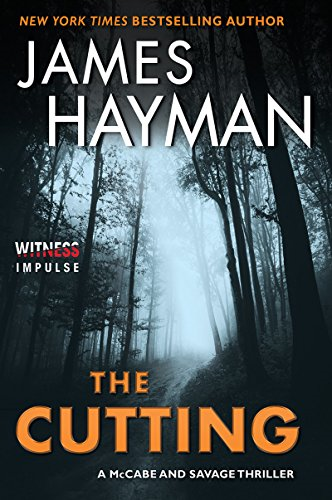
My first novel The Cutting is typical.  The Cutting is a story about illegal heart transplants.  Before I wrote a single word for the book about transplant procedures, I read at least a dozen articles and watched a number of videos that describe and show the operation in detail. I talked to three cardiac surgeons about how one goes about removing a heart from one human body and then implanting it in another. I researched the instruments and tools required for the job, learning among other things how heart-lung machines work and the brand name of the saw most typically used  to cut through the sternum and open the rib cage to get at the heart (Stryker, in case anyone is interested).

I also spent several hours with the transplant co-ordinator at Maine Medical Center discussing where hearts come from, who co-ordinates the process and who would be eligible or ineligible for such a procedure. Before publication, I sent my (almost) final manuscript to an old friend and college classmate who was and is a transplant surgeon at the Iowa Heart Center in Des Moines for a final fact check. He said I got almost everything right but suggested a few small changes, which I made.

All in all, at least a hundred hours and maybe more went into this research.

Was it really necessary for a reader’s enjoyment of the story?  Probably not.  Could the time have been better spent writing and polishing the manuscript? Possibly. Undoubtedly, most of my readers probably wouldn’t have known the difference if I’d fudged it. And for those few who happen to be cardiac surgeons and would recognize an inaccuracy, I can always adopt Coben’s retort. “Hey, it’s fiction. Who cares if it’s accurate?”

Harlan Coben has published a dozen or more successful books. I’ve published two, neither even remotely successful as most of his.  Coben’s been number one on the New York Times best-seller list.  I haven’t gotten anywhere close to that lofty status.

Still, as I close in on the finish of my third novel, Darkness First, I find myself spending more time than I probably should researching exactly how much of what drug a murderer should put in his tranquilizer dart to make sure the victim’s vicious rottweiler goes to sleep and stays asleep until the murderous deed is done.

Maybe Coben’s right.  Maybe this kind of obsessiveness about accuracy isn’t necessary.  Somehow I just like it better that way.

The Gigantic Website That Ate Up the World

Tuesday, October 18th, 2011

By James Hayman

Decades ago, one of my favorite Bill Cosby skits was called The Gigantic Chicken-Heart That Ate Up The World. Or maybe it wasn’t the world. Maybe it was just The Gigantic Chicken-Heart That Ate Up the New Jersey Turnpike. From a distance of thirty years I can’t quite remember exactly which it ate up but in either case it was something big and indigestible.

These days Amazon is beginning to feel a little too much like that gigantic chicken-heart to me.

As we all know, Amazon created the modern on-line retail model. In the process, it almost single-handedly changed the way readers buy books (online) and the way readers read books (on Kindles).  I dare say we’d be hard-pressed to find any reader today who hasn’t at some time or other purchased books from Amazon. And that includes even staunch supporters of local independent booksellers like me.

I’ve always thought the power and appeal of Amazon lay in its role as a ubiquitous product delivery system. A way for readers to find and buy virtually any book by any author anywhere in the world pretty much instantly and usually at a discounted price.

Now, however, it seems the Gigantic Amazon Chicken-Heart has just started devouring another  large mouthful of the book world.  According to a fascinating article written by David Streitfeld in last Sunday’s New York Times, today’s Amazon is not just competing with bookstores, it’s also started competing with traditional publishers, agents, publicists and reviewers.

In 2011, the company is publishing 122 books in both traditional and electronic formats. It’s also paying some pretty hefty advances for books by name authors.  Streitfeld’s article mentions an $800,000 advance paid to actress and director Penny Marshall for an upcoming memoir.

Streitfeld quotes an agent and e-book publisher named Richard Curtis who says: “Everyone’s afraid of Amazon. If you’re a bookstore, Amazon has been in competition with you for some time. If you’re a publisher, one day you wake up and Amazon is competing with you too. And if you’re an agent, Amazon may be stealing your lunch because it is offering authors the opportunity to publish directly and cut you out.”

Streitfeld also quotes an Amazon executive named  Russell Grandinetti: “The only really necessary people in the publishing process now,” says Grandinetti, “are the writer and reader…Everyone who stands between those two has both risk and opportunity.”

As a thriller writer, my books (The Cutting, The Chill of Night) have been published by a number of commercial publishers in various countries around the world: St. Martin’s/Minotaur in the US, Penguin in the UK, Random House in Germany among others. In spite of this relative success,  I was interested enough by the new Amazon phenomenon that I went to Amazon Author Central to see what I could learn. What I learned was yes, indeed, Amazon can do it all.

I’m writing this blog because I’m not sure how I feel about this agglomeration of power in the hands of one gigantic company.

On the positive side of the ledger, Amazon does help unknown writers get their works out there and helps them attract the attention of readers through its publicity and review services.  It also offers writers the promise of larger royalty payments on the books they do sell. And, as always, it offers readers a virtually unlimited choice of books, most delivered to their doorsteps overnight or in two days.

On the negative side, it all feels a little too much like Big Brother.  I worry for the survival of independent publishers, independent bookstores and independent agents. I know my agent and editors personally and like and value their opinions. I know my local booksellers and wish them nothing but success.  I’d hate to see any or all of them replaced by a website.

You can read the entire Streitfeld piece, “Amazon Signs Up Authors, Writing Publishers Out of Deal” at:

http://www.nytimes.com/2011/10/17/technology/amazon-rewrites-the-rules-of-book-publishing.html?scp=2&sq=Amazon&st=cse

As writers and readers, I’d like to know how you all feel. I invite your comments.

Barbara Ross interviews me.

Sunday, October 9th, 2011

Recently I was interviewed by Maine mystery writer Barb Ross, author of The Death of an Ambitious Woman.  Here’s the complete text of the interview.

A Conversation with James Hayman

Thriller fans have gotten to know Portland Police Department Detectives Michael McCabe and Magie Savage in James Hayman’s edge of the seat thrillers The Cutting and The Chill of Night.  Here’s a closer look at Hayman himself.

Barb Ross:  In 2001, you left New York City and the advertising industry behind to write thrillers in Portland, Maine.  What inspired such a radical change? Was the adjustment difficult?  How do you feel about it now?

Jim Hayman:  I was in the ad business for more than twenty five years and always wanted to write a thriller. By 2001 I was getting to an age where I had to ask myself Rabbi Hillel’s famous question, “If not now, when?”

I have to say transitioning from writing and producing TV commercials to writing thrillers was a lot easier than I thought it would be. Advertising’s a great training ground for thriller writing. Which is probably why so many ex-admen do it, including some pretty famous ones like James Patterson, Ted Bell, Stuart Woods, Chris Grabenstein and Marcus Sakey.

In a TV commercial you have to tell your whole story in thirty or sixty seconds so you have to learn to write tight. No wasted words allowed. You also develop a good ear for dialogue.  Anyone who’s read either of my books, The Cutting or The Chill of Night knows they’re both dialogue heavy. I use dialogue to move the story along.

To answer the final part of your question, while I miss the twice monthly paycheck the agency business afforded me, I thoroughly enjoy what I do now.

Barb:  Which brings us to setting.  What makes Portland, Maine a good setting for a series?  Are there any things about it that inhibit or confine you?

Jim:  For me, Portland is an almost perfect location. It offers everything I could want for a series of suspense novels.  Great architecture. An almost endless array of good bars and restaurants in which my hero, Mike McCabe, can enjoy his favorite single malt scotch and a New York strip steak. A gritty urban setting in which my corpses can be found..

I also like Maine’s often extreme weather which I use to advantage in both books. “Fog can be a sudden thing on the Maine coast” is the opening line of Chapter 1 in The Cutting.  For its part, The Chill of Night takes place in the middle of one of the coldest winters Maine has experienced in many years and the body of attorney Lainie Goff’s is found frozen solid in the trunk of her BMW convertible which is illegally parked at the end of the Portland Fish Pier.

Barb:  Your protagonist, Detective Sgt. Michael McCabe works for the Portland Police Department’s Crime Against People Unit.  Is there such a thing? If not, why did you invent it and what does it do?

Jim:  Crimes Against People is the real thing.  In Portland, police detectives work either in Crimes Against People which handles things like murder, rape and assault, or they work in Crimes Against Property which includes burglary and theft.

My key source who told me all about this is retired Portland Detective Sergeant Tom Joyce who once held McCabe’s job as the lead guy in Crimes Against People.  Whenever I’ve had a question about how things are really done Tom has been very generous in providing me with answers.

Barb:  Both of your books, The Cutting and The Chill of the Night were both very well reviewed.  Do you get nervous about reviews?  Do you read them?  Take them to heart?

Jim:  I’m not sure nervous is the right word, but I certainly look forward to the reviews and always read them when they come out. Frankly, I can’t imagine why any writer wouldn’t.  Who could resist reading praise for what they’ve done? And who wouldn’t at least glance at the vitriol?

Happily, with one notable exception, all of the reviews of both my books have been good, some very good and more than a few I can only call fabulous.

I have all the positive ones downloaded on my computer and when the going gets tough and I start thinking that I don’t know what the hell I’m doing trying to write a book, I open them up and re-read them to help convince myself I really can do it. My wife has actually printed a large blow-up of Lloyd Ferriiss’s review of The Chill of  Night and hung it from the wall of the room at home I use for writing.

The one lousy review I mentioned earlier was the first review of my first book, The Cutting, and to call it a stinker is an understatement. I occasionally look at that one as well. Not to cheer myself up or to find humility but just to quietly snarl at the reviewer.

Barb:  What’s coming next?  What are you working on now?

Jim:  I’m about two thirds of the way through my third thriller. The title (at least for now) is Darkness First. Unlike the first two, most of the action in number three takes place outside of Portland, in Washington County, Maine. Also the main protagonist isn’t Mike McCabe but his partner Detective Maggie Savage.  Aside from the fact that I think it’s a good story, I wanted to see if I could write an entire book almost exclusively from a female POV.


Banned Books Week: Censorship is Alive and Well and Living in America

Saturday, September 10th, 2011

By James Hayman

From September 24th to October 1st the American Library Association, the American Booksellers Association and a number of other like-minded organizations are sponsoring something called Banned Books Week: A Celebration of the Freedom to Read.  During that week hundreds of bookstores and libraries around the country will be putting up displays and hosting events to call attention to the continuing problem of censorship in America. As writers and readers I believe we should all support their efforts.

In spite of our supposedly sacrosanct first amendment protections, the tradition of censoring and banning books in America has a long and ignoble history.


In 1873 the US Congress passed the Comstock Act which made it illegal to send obscene materials through the mail. Since publishers used the mail to ship books to booksellers, Comstock and later a number of other state and local statutes, effectively put the kibosh on any printed material deemed by those in power to be obscene. Among the books that were “banned in Boston” were James Joyce’s Ulysses, DH Lawrence’s Lady Chatterly’s Lover and Henry Miller’s Tropic of Cancer.

When I was a teenager attending a New England boarding school, I remember reading a contraband copy of Tropic of Cancer that had been smuggled into my dormitory. The book was passed from room to room where one boy after another breathlessly read Miller’s sexually charged prose, usually after “lights out” and almost always with the aid of a flashlight. I don’t think any of us were permanently damaged by the experience.

While most censorship statutes were eventually struck down by the Supreme Court as infringements on first amendment rights, censorship, most often at the dictate of local school boards, marches on.


It seems extraordinary (and more than a little quaint) to me that today, in the age of Internet, when virtually anything is available to just about anyone’s eyes at the click of a mouse, that schools and libraries around the country are still banning books.  And not just pornographic or salacious books either, but genuine classics like Harper Lee’s To Kill a Mockingbird, J.D. Salinger’s Catcher in the Rye, Aldous Huxley’s Brave New World and Toni Morrison’s Beloved among others .

And while these books are at least arguably intended for mature audiences, many children’s classics have not been spared the censor’s steely gaze. Assigning Mark Twain’s Huck Finn as required reading in schools has been controversial for years, (usually because of its use of the so-called N word.) J.K. Rowling’s Harry Potter books, which, as we all know, tell the story of a young wizard and his adventures in wizard school, have been opposed by some who find their focus on wizardry and magic religiously offensive.  And Katherine Paterson’s Newbery Award winner Bridge to Terabithia has been challenged as recommended reading by school boards all over the country (including Lincoln, Nebraska, Burlington, Connecticut, Apple Valley, California, Mechanicsburg, PA. and, closer to home, Medway, Maine) because of references to witchcraft and profanity, most notably the use of the phrases like “Oh Lord” and “Lord” as expletives.

To learn more about Banned Books Week, click on the link:

http://www.bannedbooksweek.org/